Looking for land without giving up convenience? Los Ranchos de Albuquerque offers a rare mix of semi-rural living, agricultural character, and close-in access to Albuquerque. If you are considering a move here, it helps to understand how acreage, zoning, irrigation, and lot layout can shape your day-to-day experience. Let’s dive in.
Why Los Ranchos Feels Different
Los Ranchos de Albuquerque is an incorporated village with deep agricultural roots. The village notes that the area has been settled for at least 2,500 years, remained agricultural through the Spanish Colonial period, and was officially incorporated in 1958.
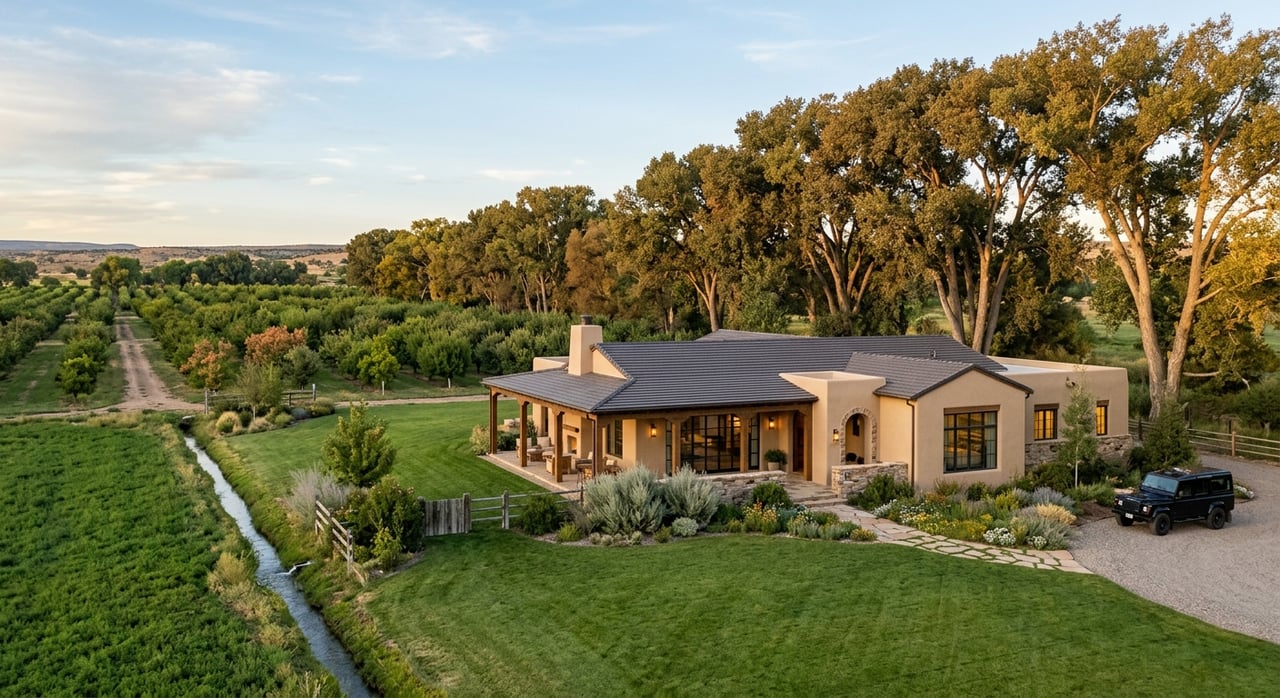
That history still shows up in the landscape today. You will see acequias, mature trees, larger lots, and parcel patterns influenced by historic lineas or tripas layouts that were designed to provide both irrigation access and road frontage.
For buyers, that means Los Ranchos is not just another suburban market with bigger yards. Parcel shape, access, setbacks, and irrigation features can affect how a property lives and what you can do with it.
Acreage Means More Than Lot Size
If you are relocating from out of state, it is easy to assume acreage tells the whole story. In Los Ranchos, the better question is how the land is zoned and how much of it is actually usable for your goals.
The village’s 2035 Master Plan describes Los Ranchos as semi-rural and identifies four character areas centered on Rio Grande Boulevard, Guadalupe Trail, and Fourth Street. That matters because frontage, setbacks, and overall neighborhood feel can vary meaningfully depending on the corridor.
A one-acre parcel in one area may function very differently from a similarly sized parcel elsewhere. Road exposure, ditch placement, and character-area rules can all change how private, flexible, or buildable a property feels.
Key zoning districts to know
For many acreage buyers, zoning is the first and most important filter. Here are a few of the village zones that often come up in a property search:
- A-1 requires a minimum lot area of 1 acre
- A-2 allows 1 dwelling per 2 acres
- A-3 allows 1 dwelling per 3 acres and applies only to Los Poblanos Estates
- R-3 is a residential zone with a minimum lot area of 3/4 acre, or 1/3 acre where community water and sewer are available
- AC is intended for sustainable agricultural activity and requires at least 1 acre or 66 percent of the lot area, whichever is larger, to remain open space dedicated to agricultural use
What A-1 zoning can allow
A-1 zoning is especially important for buyers drawn to a hobby-farm or equestrian lifestyle. The code explicitly permits barns, corrals, animal pens, agricultural activities, livestock, riding stables, home occupations, and bed-and-breakfasts.
That does not mean every A-1 property is ready for those uses on day one. You still need to confirm the lot layout, utility setup, and any additional approval requirements that may apply to the specific property.
Guest Houses and Extra Structures
A common relocation question is whether a Los Ranchos property can include a guest house or caretaker space. The answer depends on zoning, lot size, and water or wastewater conditions.
In A-1, a guest house is limited to 1,000 square feet of heated area. It may not have a garage or separate address, and additional dwellings are only allowed under specific lot-size and water or wastewater conditions.
This is one area where listing photos rarely tell the full story. If a second structure matters to you, it is worth confirming early whether it is legal, conforming, and suitable for your intended use.
Setbacks Can Shape Your Buildable Area
In Los Ranchos, setbacks matter just as much as acreage. A parcel may look spacious online, but the true buildable envelope can be smaller than expected.
In A-1, A-2, and A-3, the standard setback from an irrigation ditch or drain is 25 feet. Rio Grande Boulevard frontage can also be subject to special character-area setback rules.
That is why lot walks are so important here. Standing on the land helps you understand edges, frontage, privacy, and how much flexibility you may actually have for outdoor living, additions, barns, or other improvements.
Irrigation and Acequias Are Part of Ownership
One of the defining features of Los Ranchos is its acequia and ditch system. The village maintains resources for owners and buyers, including maps, online viewers, GPX files, ditch-rider contacts, and information tied to the broader irrigation network.
The village’s master plan appendix explains that the ditch system supports irrigation, drainage, and sometimes recreation. It also notes that land ownership and use around these systems can be complex.
If a property borders an acequia or drain, that can be part of its charm and part of its due diligence. You will want to understand access, maintenance responsibilities, setbacks, and how the water features affect your plans for landscaping or structures.
Utility basics to confirm
Los Ranchos is served by:
- ABCWUA for water
- PNM for electricity
- New Mexico Gas Company for gas
For more intensive irrigation setups, ABCWUA requires approved backflow prevention on non-residential irrigation systems. In A-1, proof of water availability must be submitted when a licensed agricultural activity needs it, and some guest-house approvals also require public water and sewer or an NMED wastewater permit.
Landscaping in a Semi-Rural Setting
Many Los Ranchos properties feature mature landscaping, lawns, shade trees, and established garden areas. These can be beautiful, but they also come with ongoing maintenance and water-planning considerations.
New Mexico State University Extension notes that gardens require regular pruning, weeding, pest management, irrigation checks, and seasonal adjustments. It also cautions that gravel mulch alone can increase heat around the house and raise cooling costs.
ABCWUA also promotes xeriscape rebates and Water Smart Contractor training. If you are comparing properties with lush irrigated yards versus more desert-adapted landscaping, it helps to think beyond curb appeal and consider upkeep, comfort, and water use.
Horses, Livestock, and Hobby-Farm Goals
If your ideal move includes horses or farm animals, Los Ranchos can be appealing, but careful verification matters. The village’s animal code defines livestock broadly to include horses and other farm animals.
The village now directs residents to Bernalillo County Animal Care Services for animal care needs. Before closing, it is wise to confirm zoning, enclosure design, and the practical requirements for day-to-day animal management on that specific parcel.
Even when a use is allowed in principle, the details still matter. Fencing, barn placement, drainage, access, and water setup can make a big difference in whether a property truly supports the lifestyle you want.
Private Covenants May Also Apply
Village zoning is only one piece of the picture. Some residential properties may also be subject to neighborhood covenants, architectural rules, or committee review.
The village states that it does not enforce private covenants. That means buyers should request and review any HOA documents, architectural guidelines, and private restrictions separately from the village code.
This step is especially important if you are buying for a guest house, exterior changes, animals, or future improvements. A property can meet village zoning rules and still be subject to private limitations.
How To Tour Los Ranchos Efficiently
Because Los Ranchos has distinct corridors and character areas, a smart touring plan can save you time and help you compare properties more accurately. Rather than seeing homes in a random order, it often makes sense to group showings by micro-area.
For example, you may want to compare properties along Rio Grande Boulevard separately from those near Guadalupe Trail or Fourth Street. That makes it easier to notice differences in frontage, traffic feel, privacy, setbacks, and overall setting.
When possible, walk the lot edges in person. This is especially valuable if the parcel fronts an acequia, drain, or a major corridor where setbacks and access may shape how the land functions.
What Relocation Buyers Should Focus On First
If you are narrowing your options, start with the questions that most directly affect fit and future flexibility:
- What is the exact zoning of the property?
- How much of the parcel is truly usable once setbacks are applied?
- Does the lot border an acequia or drain?
- Are guest houses, barns, corrals, or animal uses allowed for this property?
- What utilities and water approvals are already in place?
- Are there private covenants or architectural rules?
- How does the corridor or character area affect privacy and feel?
These questions can help you move beyond the listing description and assess whether a property supports your actual lifestyle goals.
Why Careful Guidance Matters Here
Los Ranchos rewards buyers who look closely. It is a highly appealing market for those who want space, character, and a more grounded way of living, but the right fit often depends on details that are easy to miss online.
That is especially true when you are relocating on a compressed timeline or comparing very different properties. Parcel configuration, zoning, irrigation, and private restrictions can all affect long-term satisfaction.
Working with a local advisor who understands nuance can help you narrow choices faster, ask better questions, and reduce the risk of surprises. If you are planning a move to Los Ranchos and want strategic guidance on acreage, zoning, and lifestyle fit, connect with Giulia Urquhart for thoughtful support tailored to your relocation goals.
FAQs
What makes Los Ranchos different from other Albuquerque-area neighborhoods?
- Los Ranchos is an incorporated village with a semi-rural setting, deep agricultural history, acequias, and larger lots that often function differently from standard suburban parcels.
What should buyers know about acreage in Los Ranchos?
- Acreage alone does not tell the full story. Zoning, setbacks, parcel shape, ditch access, and corridor location all affect how usable a property may be.
What zoning allows hobby-farm uses in Los Ranchos?
- A-1 zoning is often the key district for hobby-farm buyers because it permits uses such as barns, corrals, animal pens, agricultural activities, livestock, and riding stables.
What are the guest house rules for Los Ranchos A-1 property?
- In A-1, a guest house is limited to 1,000 square feet of heated area, cannot have a garage or separate address, and may require certain water or wastewater conditions to be met.
What should buyers know about acequias in Los Ranchos?
- Acequias and ditches are a defining part of the area and can affect irrigation, drainage, setbacks, access, and land use, so they should be reviewed carefully during due diligence.
Do private covenants matter when buying in Los Ranchos?
- Yes. The village does not enforce private covenants, so buyers should separately review any HOA rules, architectural guidelines, or deed restrictions that may apply to the property.